
Treatments
Periodontics treats the tissues that surround and support teeth and implants. Every treatment starts with a full assessment and continues with regular follow-up.
How treatment works
Periodontal assessment
A complete diagnosis of the health of the gums and the bone around each tooth.
Gum treatment
Every case is different: treatment is tailored to the diagnosis made.
Periodontal maintenance
Regular care of stabilised gums, to keep the results over time.
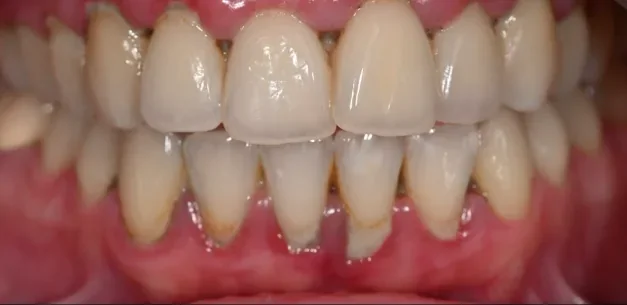
Gum disease
Gingivitis is inflammation of the gums: they bleed when brushing and look red or swollen. Left untreated, it can progress to periodontitis, which gradually destroys the bone around the teeth. Warning signs: bleeding, red, swollen or painful gums, bad breath, receding gums, loose or shifting teeth. A single one of these signs is reason enough to book a check-up.
Treatment starts with tailored oral hygiene instruction and deep cleaning of the roots. A re-evaluation then shows whether non-surgical treatment should continue, or whether one or more surgical procedures are needed. Regular maintenance visits keep the result stable.
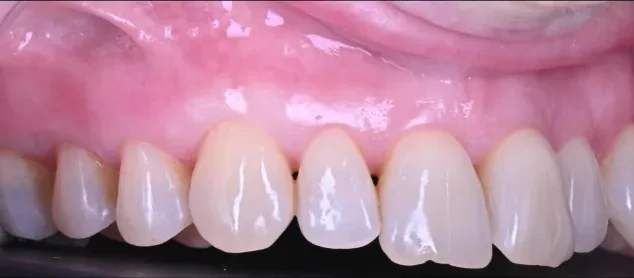
Gum recession and grafts
Gum recession is when the gum pulls back and exposes the root. It can cause sensitivity, an aesthetic concern, wear lesions at the neck of the tooth, decay on the exposed root, and make brushing painful.
Several surgical techniques exist: a precise analysis of each case points to the technique best suited to the clinical situation.
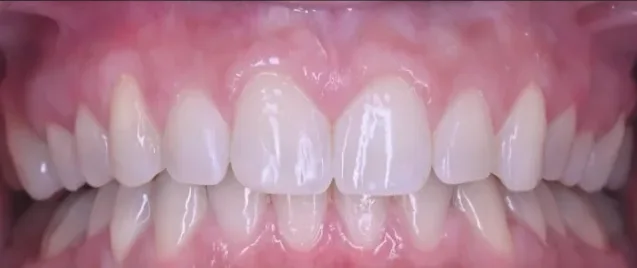
Aesthetic gum surgery
Excess gum tissue can make teeth look short or produce a “gummy smile”. The cause is identified first: thickened gums (gingival hyperplasia), incomplete tooth eruption or a poorly positioned bone.
Depending on the diagnosis, a gingivectomy reshapes the gum, or a crown lengthening repositions gum and bone to restore natural proportions. Crown lengthening is also used before a crown or a veneer, to harmonise the outline of the teeth and the smile.
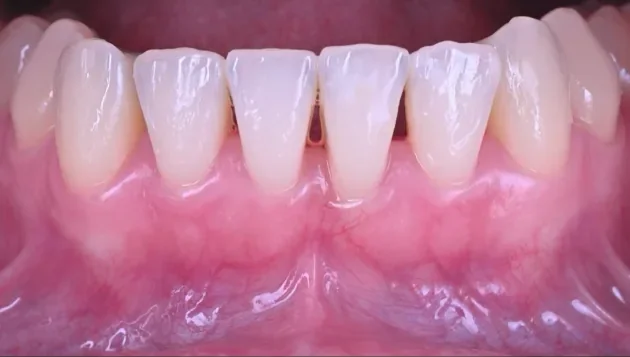
Regenerative surgery
When periodontitis has created defects in the bone, it is sometimes possible to regenerate the lost tissue instead of extracting the tooth. Surgery combines careful cleaning of the roots with proteins that support healing and bone-filling biomaterials. A gum graft is sometimes placed during the same procedure, or in a second one.
Where tissue regeneration is not possible, resective surgery is carried out: it reshapes the bone into an architecture compatible with healthy periodontal tissues, so that the disease can still be stabilised.
Around implants, the same principles are used to treat bone loss around the implant (peri-implantitis) and to thicken the soft tissue so the implant stays stable over time.